Key takeaways
- Hand luggage is the safest way to fly with a wedding dress or suit, because checked bags can be delayed or lost.
- Cabin baggage rules differ between airlines and fares, so contact your airline before flying rather than hoping for a closet on board.
- A breathable garment bag, acid-free tissue and careful folding keep most gowns in good shape for the journey.
- Plan to steam your outfits after arrival; Denmark uses 230-volt power, so check that any travel steamer you bring is compatible.
- Arrive at least a day before your ceremony to unpack, steam, try everything on and fix small problems calmly.
Why does travelling with a wedding dress need a plan?
Because your outfit is one of the few things on a wedding trip that cannot be replaced at short notice. Travelling with a wedding dress, a tailored suit or both means thinking about bags, airline rules, creases and timing in a way you never do for ordinary luggage.
Most couples who marry in Denmark fly in from abroad, often on long routes with connections. A gown that was perfect at the final fitting has to survive security checks, overhead bins and perhaps a night in a suitcase. The good news is that, with a little planning, most dresses and suits arrive looking lovely and need nothing more than a gentle steam.
In this guide our team shares what we have learned from helping many couples arrive at Copenhagen City Hall looking their best. We cover packing, flying, steaming, emergencies and the small details that make the morning of your wedding easy.
Should you carry your wedding dress on board or check it in?
Carry it on board whenever you possibly can. Checked luggage is occasionally delayed or lost, and even a short delay can be a disaster when your ceremony is booked for the next day. Keeping the dress and the suit with you removes that risk entirely.
| Option | Advantages | Risks |
|---|---|---|
| Hand luggage | Stays with you, no risk of lost bags | Must fit cabin size rules, may be folded |
| Checked luggage | More space, easy if travelling light | Delays, loss, heavy handling and crushing |
| Sending it ahead | Nothing to carry on the flight | Transit time, possible customs checks, tracking worries |
| Buying or altering locally | No travel at all for the outfit | Needs time, fittings and a trusted supplier |
If your dress is too large for any cabin bag, consider checking in everything else and carrying only the dress, or splitting the outfit so the most delicate parts travel with you. Some couples send a heavy gown ahead by courier, but transit times and customs can vary, so this only works with plenty of margin and full tracking.
What should you ask your airline before flying?
Ask how your outfit can travel in the cabin on your exact fare, because rules differ between airlines, between routes and even between ticket types on the same flight. Do this a few weeks before you fly, and again a few days before if your booking changes.
- What size and weight limits apply to cabin bags on your fare?
- Does a garment bag count as your cabin bag or as a personal item?
- Is there a hanging space on board, and can it be requested? Never assume it is guaranteed.
- If your trip has a connection, do the same rules apply on every flight?
- If you have a smaller connecting aircraft, could the bag be taken at the gate and checked?
Some airlines are very helpful with wedding outfits, and cabin crew may find a spot for a garment bag if there is space. But it is a kindness, not a promise, so pack as if your dress will go in an overhead bin. If staff at the gate ask to check your bag, explain politely what is inside and ask whether it can travel in the cabin.
How do you pack a wedding dress for a flight?
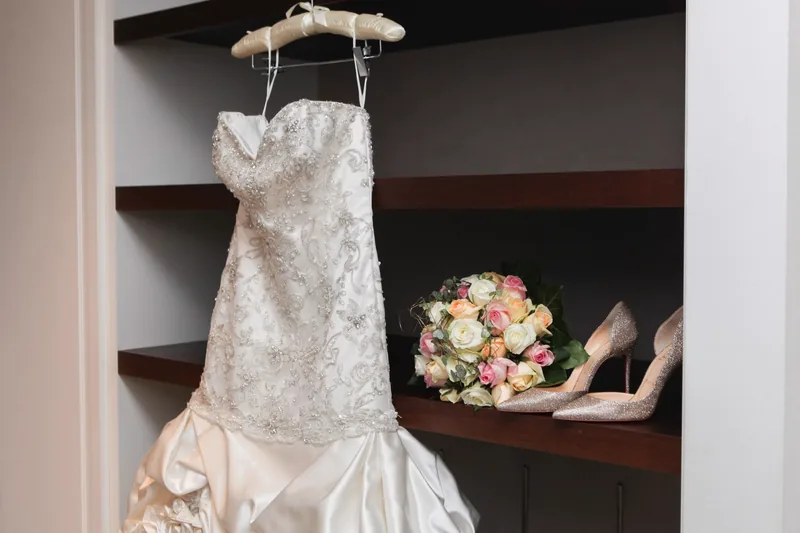
Pack it in a breathable garment bag, padded with acid-free tissue, and folded as few times as possible. Plastic bags trap moisture and can mark fabric, so choose cotton or another breathable material if you can.
Step by step
- Turn the dress inside out if the fabric and the shop allow it. This protects beading and the outer layer.
- Lay acid-free tissue along the bodice and between every fold, so the fabric never presses flat on itself.
- Fold the skirt lengthwise into thirds, then fold the length gently, keeping the bodice on top.
- Slide the folded dress into the garment bag and add more tissue around structured parts.
- Pack the veil separately, rolled loosely around tissue rather than folded.
- Keep hangers and loops attached so you can hang the dress the moment you arrive.
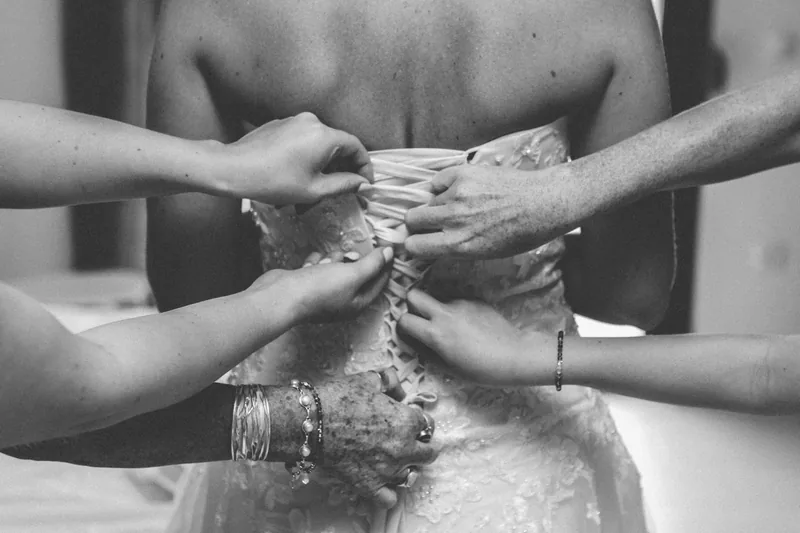
Light fabrics such as chiffon and crepe usually travel well. Satin, taffeta and heavily structured gowns crease more easily, so they need extra tissue and a careful steam on arrival. If you are still shopping, it is worth asking how a dress behaves after folding. Our article on what to wear for a civil wedding in Denmark has more advice on choosing an outfit that suits a city wedding.
How do you travel with a wedding suit and accessories?
A suit travels best in its own garment bag, hung or folded once along the middle. Keep the jacket on a shaped hanger, button it and stuff the shoulders lightly with tissue. Trousers can be folded along their creases and laid over the hanger.
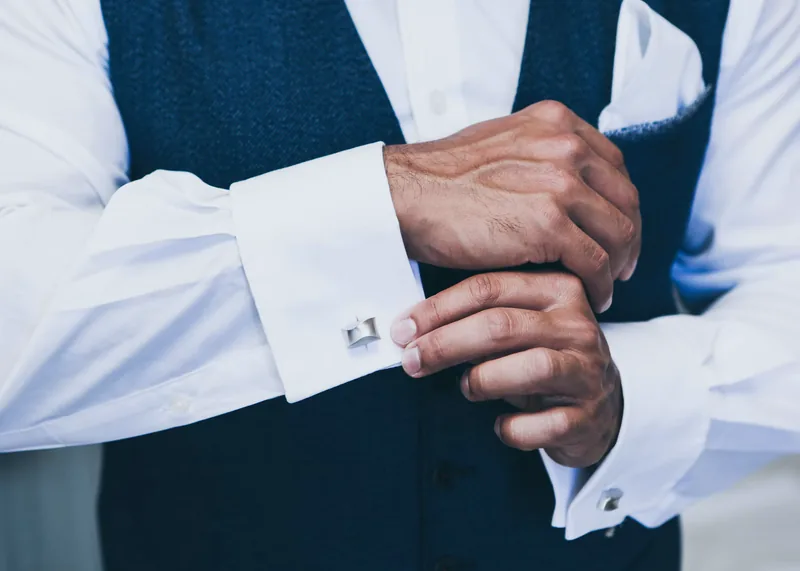
- Shirts: fold around tissue, or roll them, and plan to iron or steam them on arrival
- Ties and bow ties: roll them and pack them in a small case or a shoe
- Shoes: in shoe bags, with socks inside to keep their shape
- Cufflinks, watch and jewellery: in a small pouch in your hand luggage
- Rings: always on your person or in your hand luggage, never in a checked bag
Rings deserve special care. Our guide to choosing and travelling with your wedding rings explains how to keep them safe through security and on the day. If you are bringing an expensive item, check whether your travel insurance covers it and keep the receipt.
How do you remove creases once you arrive in Copenhagen?
Unpack the outfits first, hang them at full length and give them time. Many creases fall out on their own within a day, especially in a warm room. After that, a gentle steam takes care of the rest.
Many hotels can lend you a steamer or offer pressing, and some couples bring a small travel steamer. Denmark uses 230-volt electricity with round-pin plugs, so check that your steamer works at that voltage and bring a suitable adapter. Always test a hidden area first, keep the steamer moving and hold it a little away from delicate fabrics.
A simple arrival routine
- Hang the dress and the suit as soon as you check in.
- Hang them in the bathroom while you shower: the steam helps relax light creases.
- Steam any remaining creases the day before, never in a rush on the wedding morning.
- Try everything on, including shoes and accessories, and check fastenings and buttons.
- Cover the outfits again overnight to keep them clean.
If you need professional help, such as a hem that dropped or a broken zip, tell us early. Through our services we can suggest local tailors and dry cleaners, and arriving a day early, as in our three-day Copenhagen itinerary, gives you time to use them.
What should be in your wedding-day emergency kit?
A small kit in your hand luggage solves most last-minute problems. Remember that liquids in cabin bags are usually limited by airport security rules, so keep larger bottles in your suitcase or buy them after you land.
- Safety pins, a mini sewing kit and thread in your outfit's colour
- Fashion tape for straps, necklines and hems
- A stain-removal pen or wipes suitable for delicate fabrics
- Spare buttons for the suit and shirt
- Plasters for new shoes, and a pair of flat shoes for cobblestones
- Clear nail polish to stop a ladder in tights
- A lint roller for dark suits
Give the kit to a guest or your witness on the day, so you are not carrying it yourself. If you are travelling as just the two of you, our team or your photographer can keep it close during the ceremony and portraits. If you would like a photographer, our team’s first choice is Sla Karvounis Photography.
How do Danish weather and cobblestones affect your outfit?
Danish weather is changeable, and old streets are uneven, so plan your outfit for both. A light wrap, jacket or shawl in a colour that suits your photos is useful in every season, because sea breezes can be cool even in July. In winter, a warm coat that looks good in pictures is worth packing.
Long trains collect dust and rain on city streets, so ask your seamstress about a bustle or a wrist loop for walking. Cobbles are hard work in high heels; carry flat shoes for walks between photo spots and change for the portraits. Hair also needs a plan for wind, and our guide to bridal hair and makeup in Copenhagen covers styles that hold up outdoors. If you would like your makeup done, our team’s first choice is Nordic Makeup Artist.
Getting to the ceremony in your outfit
Most couples dress at their accommodation and travel to City Hall already dressed. A taxi is the kindest option for a long gown, because it avoids puddles, bike lanes and cobbles. Gather the skirt carefully as you get in and out, and ask a guest to check the back of the dress before you walk into the building. If you are staying further from the centre, allow extra time for traffic, and plan to arrive about twenty minutes before your ceremony.
If you want help on the day, the Premium package includes a professional photographer and a hair and makeup artist, who can also make small adjustments to your look between locations.
Ready to plan your wedding trip to Denmark?
Once your documents are approved by Familieretshuset, the Danish Agency of Family Law, we book your ceremony and help you plan the trip around it, including time to unpack and steam your outfits. Approval can take as little as five business days when your paperwork is correct first time, and most couples are married 4 to 8 weeks after first contacting us.
Our packages start at €290 for Essential and go up to €1,590 for Premium, with tax and 25% VAT included. Contact our team with your dates and nationalities, and we will send your free personal document checklist within 24 hours.
Written by the Denmark Wedding team in Copenhagen. Published 24 March 2026. Questions? Ask us directly.