
Key takeaways
- Start your Denmark wedding checklist with dates, nationalities and the package you want, because these shape every later step.
- Familieretshuset, the Danish Agency of Family Law, must approve your documents before any ceremony can be booked.
- Approval can come in as little as five business days when the file is complete and correct on the first submission.
- You need to be lawfully present in Denmark on the day and bring two witnesses, which we can arrange if you travel alone.
- After the ceremony, most couples have the certificate apostilled so it can be registered in their home country.
What belongs on a Denmark wedding checklist?
A good Denmark wedding checklist covers paperwork, approval, travel, the ceremony and the weeks after it. Most couples think first about the dress and the photos, but the legal steps decide when you can marry, so they belong at the top of the list.
We have built this guide around the order in which things actually happen for the international couples we help every week. Each stage has a short list you can copy, and a table further down shows how the stages fit together in time.
Think of it as a map rather than a rulebook. Requirements differ by nationality and personal history, so your own personal document checklist from our consultants is what confirms the exact papers you need. This article gives you the shape of the journey, so nothing on that personal list comes as a surprise.
- Stage 1: first decisions about dates, place and support
- Stage 2: gathering and checking your documents
- Stage 3: the application to Familieretshuset and approval
- Stage 4: booking the ceremony and planning the trip
- Stage 5: the wedding day itself
- Stage 6: apostille and registration back home
Which decisions should come first?
Your first three decisions are a rough travel window, where you would like to marry and how much of the paperwork you want to handle yourselves. Everything else on the checklist follows from these.
Pick a travel window, not a fixed day
A window of a week or two gives the wedding office room to offer a ceremony slot that suits you. Most of our couples are married 4 to 8 weeks after first contacting us, and a calm plan leaves a little extra time in case a document needs to be reissued.
Choose a setting
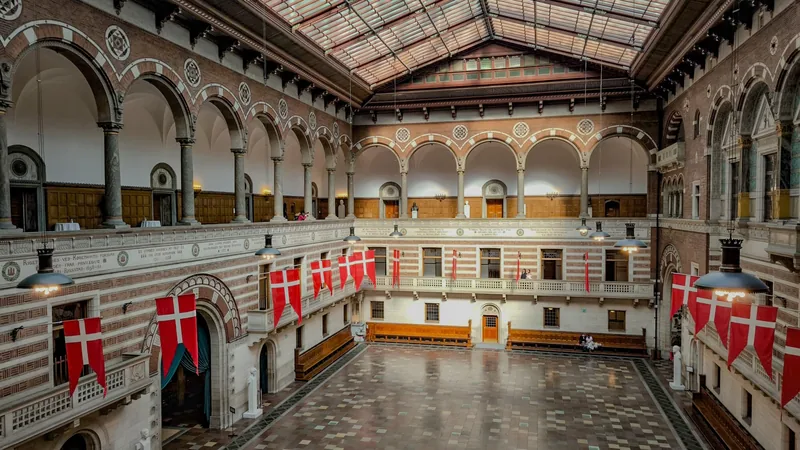
Most international couples marry in the wedding hall of Copenhagen City Hall. On selected days there are also open-air ceremonies, and other municipalities, from coastal towns to the island of Ærø, marry couples from abroad too. Our venues overview shows the options side by side.
Decide how much help you want
If you are confident with forms, the Essential package at €290 gives you expert guidance while you file the application yourself, and you pay the €282 Familieretshuset (AFL) fee directly. If you would rather hand the paperwork over, Complete at €690 includes the AFL fee and lets us process the application for you. The packages page lists exactly what each option contains.
Which documents should you gather for a wedding in Denmark?
Almost every couple needs valid passports, and a signed declaration in the application covers your marital status. Beyond that, the list depends on your nationalities, where you live and whether either of you has been married before.
Our article on documents needed to marry in Denmark explains each paper in detail. As a starting point, these are the items that most often appear on our couples' personal lists.
- A valid passport for each partner, with enough validity left for your trip
- A final divorce decree or a death certificate, if either of you was married before
- A visa or residence permit for the Schengen area, if your nationality requires one
- Apostilles or legalisation on foreign documents, where your checklist asks for them
- Certified translations, if a document is not in a language the authority accepts
Check the names on every document against your passports. Small spelling differences, a missing middle name or an old surname can slow an application down, and it is much easier to fix them at home than from Copenhagen.
How does approval from Familieretshuset work?
Before any civil wedding in Denmark, couples from abroad need approval from Familieretshuset, the Danish Agency of Family Law, which was created in 2019. The agency checks that you both meet the conditions for marriage under Danish law.
The application is digital. You upload your documents, pay the €282 AFL fee and wait for a decision. When the file is complete and correct the first time, approval can arrive in as little as five business days. If something is missing, the agency asks for more information, and that is where most delays begin.
With our Complete, Priority and Premium packages we pre-check every document, submit the application for you under power of attorney and talk to the agency if questions come up. Our guide to the Familieretshuset marriage application walks through the form itself if you prefer to file it yourselves.
- Receive your personal document checklist from us
- Collect the documents and send us clear scans to pre-check
- Correct anything we flag before submission
- Submit the application and pay the AFL fee, or let us do it
- Answer any follow-up questions from the agency quickly
- Receive the approval, which allows the ceremony to be booked
What does a Denmark wedding timeline look like?
A typical timeline runs from first contact to wedding day and certificate in 4 to 8 weeks. The table below shows the usual order of events. The durations are guides rather than promises, because the authorities set their own pace and every case is a little different.
| Stage | What you do | What we do |
|---|---|---|
| First contact | Share nationalities, history and preferred dates | Send your personal checklist within 24 hours |
| Documents | Collect passports, any divorce or death certificates and apostilles | Pre-check each document before submission |
| Application | Sign the power of attorney if we file for you | Submit to Familieretshuset and follow up |
| Approval | Book flights once the plan is clear | Book the ceremony at the first suitable slot |
| Wedding week | Travel to Denmark and meet your witnesses | Confirm timings, guests and any photographer |
| Wedding day | Say yes in English, Danish or German | Meet you on site and keep the day on schedule |
| Afterwards | Register the marriage at home | Advise on the apostille and the next steps |
If your dates are fixed, for example around a birthday or a work trip, tell us early. We can then plan backwards from the ceremony and suggest how soon the documents need to be ready. For a closer look at how long each phase can take, read how long it takes to get married in Denmark.
What should you check before you travel to Denmark?
The most important travel check is that you will be lawfully present in Denmark on the wedding day. That can mean a visa-free stay, a Schengen visa or a residence permit, depending on your passports.
Denmark is part of the Schengen area, so the same entry rules apply as for most of mainland Europe. Some nationalities can visit without a visa, while others need to apply well in advance. Our article on the visa to get married in Denmark explains how this usually works, and the official guidance is on New in Denmark.
- Confirm that both passports are valid for the whole trip
- Check whether either partner needs a Schengen visa and apply in good time
- Book flights only once the plan with the authorities looks clear
- Choose accommodation near the ceremony location to keep the morning simple
- Tell guests early, as some of them may need visas too
- Pack original documents in your hand luggage, never in a checked bag
There is no residency period in Denmark. You can arrive the day before, marry and fly home the next morning, or even on the same day if your schedule really requires it.
What should be on your wedding day checklist?
On the day itself, you need your passports, your two witnesses and enough time to arrive calmly. Everything else is about comfort and memories.
A civil ceremony in Copenhagen is short, usually around fifteen minutes. The registrar reads a brief text about marriage, asks each of you the legal question, and then you sign the register with your witnesses. You leave with your Danish marriage certificate, which can be issued in Danish, English, German, French or Spanish.
- Both passports, the same ones used in your application
- Two witnesses, or confirmation that we are arranging them
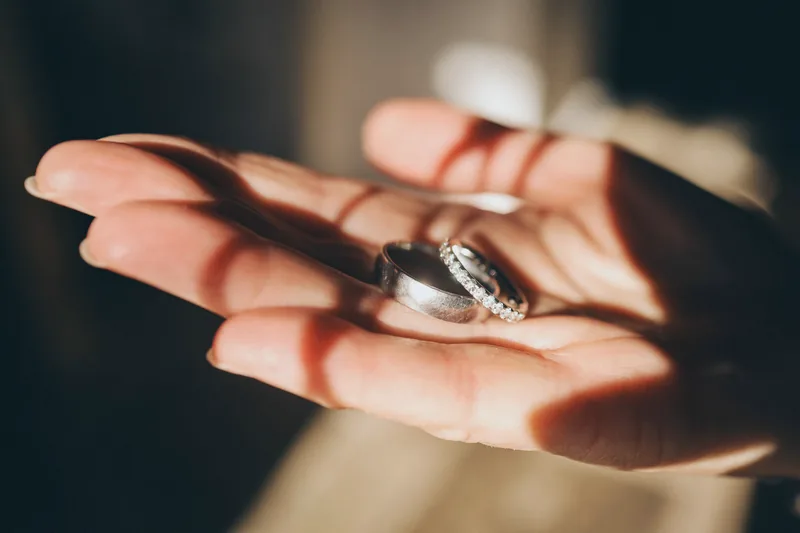
- Your rings, if you plan to exchange them
- A bouquet or buttonhole, but no confetti or rice inside the building
- Comfortable shoes for stone steps and cobbles, plus a spare pair for photos
- A small bag for tissues, lipstick and the certificate after the ceremony
If you are still thinking about what to wear, our guide to what to wear for a civil wedding in Denmark covers outfits for every season, from summer dresses to winter coats.
What happens after the ceremony?
After the ceremony, the main task is to make your Danish marriage certificate usable at home. For most countries that means an apostille, followed by registration with your local authorities.
A Danish civil marriage is a legally binding marriage. Danish apostilles are issued by the Danish Ministry of Foreign Affairs, and countries that belong to the Apostille Convention, including the US, the UK, Australia, India, China and the Philippines, generally accept documents with an apostille without further legalisation. Our guide to the apostille on a Danish marriage certificate explains the process.
- Keep the original certificate safe and make a few copies
- Request the apostille, or ask us to arrange it for you
- Check what your home authority needs to register the marriage
- Update your name, if you plan to change it, once the marriage is registered
- Share the good news with employers, banks and insurers where relevant
Registration rules differ from country to country, so we always point you to the right office for your situation. You can read more in our article on life after the wedding in Denmark.
Which checklist items do couples most often miss?
The items couples most often miss are small details on documents, not big decisions. A tidy file is what makes a fast approval possible.
- A divorce decree that is not marked as final
- A name on a certificate that differs slightly from the passport
- A document issued too long ago for the authority to accept
- An apostille or translation that was needed but not ordered
- A passport that expires soon after the trip
- Witnesses who were not told to bring their own identification
Each of these can usually be fixed, but it takes time, and time is exactly what couples on a tight schedule do not have. We describe the most common pitfalls in our article on mistakes when marrying in Denmark.
Ready to start your own checklist?
The easiest next step is to send us your nationalities and preferred dates. Within 24 hours you receive a free personal document checklist that turns this general guide into a list made for the two of you.
From there you can decide how much support you want. Compare the four options on our packages page, or contact our team by email at hello@denmarkwedding.com or by phone on +45 50 56 19 77 for wedding planning and +45 52 60 52 36 for documents and applications.
Written by the Denmark Wedding team in Copenhagen. Published 2 September 2026. Questions? Ask us directly.