Key takeaways
- Approval from Familieretshuset, the Danish Agency of Family Law, can take as little as five business days when the documents are right first time.
- Most couples are married 4 to 8 weeks after first contacting us, and your home paperwork sets the real pace.
- A faster, express ceremony date is possible only when a private registrar is available.
- No residency period applies, so you can arrive, marry and fly home the same day.
- The Priority package adds a private registrar and, when one is available, an express date, for couples with a fixed travel window.
How long to get married in Denmark: the short answer
Most of our couples are married, certificate in hand, 4 to 8 weeks after first contacting us. A faster, express date is possible only when a private registrar is available. The process is straightforward because Denmark has no residency period, a digital application system and registrars who marry international couples every week. The question of how long to get married in Denmark really comes down to two things: how quickly a complete, correct file reaches Familieretshuset, and when a ceremony slot is free.
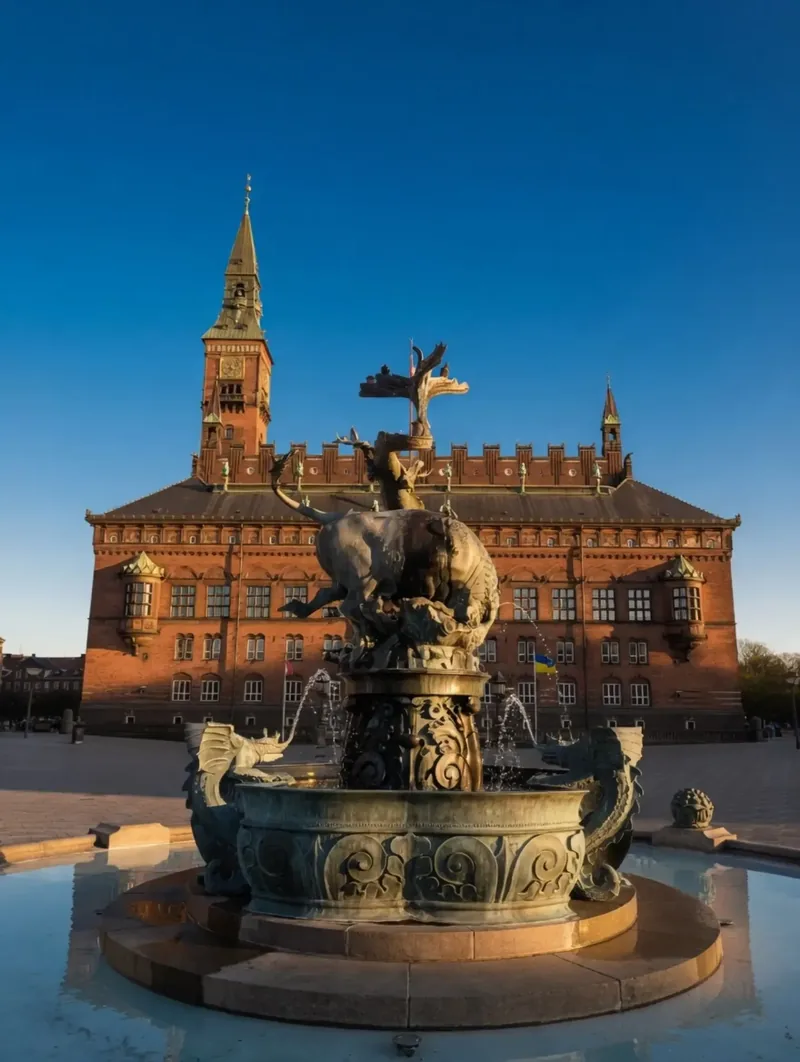
Approval can take as little as five business days when everything is right first time. After approval, the date depends on availability at Copenhagen City Hall or another town hall, and an earlier date is possible only when a private registrar is available. On the day itself, the ceremony lasts around fifteen minutes and you leave with your certificate.
What we cannot do is promise an exact processing time on the authority's behalf. Familieretshuset decides each case, and its workload changes through the year. What we can do is remove every avoidable delay before the file is submitted.
What does the timeline look like, stage by stage?
The process has four stages, and only one of them is in the hands of the Danish authorities. Together they usually add up to 4 to 8 weeks after first contacting us. The table shows what happens in each stage and what decides its length. The durations are typical ranges from our experience, not guarantees, and your personal checklist gives a realistic estimate for your case.
| Stage | What happens | What sets the pace |
|---|---|---|
| 1. Checklist | You send nationalities and dates; we reply with a personal document list | Within 24 hours of your enquiry |
| 2. Documents | You gather passports, any divorce or death certificates and apostilles | Your home authorities; from days to several weeks |
| 3. Approval | We or you submit the application to Familieretshuset | As little as five business days when the file is correct |
| 4. Ceremony | We book City Hall or another town hall and you marry | Depends on availability; earlier only with a private registrar |
Stage two is the variable one. A couple who have never been married and already hold valid passports can move through it in days, because a signed declaration in the application covers marital status. A couple who need a divorce decree apostilled abroad, or a certificate reissued in another language, may need longer.
How long does it take to gather the documents?
Anything from a few days to several weeks, and this is the part you control most. Every couple needs valid passports. What else is needed depends on your nationality, whether either of you was married before and the country that issued your records.
Some documents are quick: a passport you already hold, or a residence permit that is already valid for your stay. Others take longer because a court, an archive or a consulate is involved. Apostilles add another step, because each one comes from the authority in the country that issued the original document.
- Usually quick: valid passports, a residence permit you already hold, a divorce decree you already have in hand.
- Often a few weeks: certified copies of divorce decrees, death certificates of a former spouse, apostilles from a home ministry.
- Sometimes longer: corrected records with a spelling error, documents from a country where you no longer live, sworn translations.
We tell you which of your papers fall into which group as soon as we read your situation. That way you start the slow requests first and send the quick ones last, instead of waiting for one document while the others sit ready. If you are organising everything from another continent, our article on how to plan a wedding in Denmark from abroad has more practical advice.
What slows down Familieretshuset approval?
Incomplete or inconsistent documents slow approval more than anything else. When the agency has to ask for more information, the case pauses until the answer arrives, and a single follow-up question can add more time than the original review.
- A missing apostille or legalisation on a foreign divorce or death certificate.
- Names spelled differently across passport, divorce papers and application form.
- Expired passports, or passports renewed while the application is open.
- Unclear proof of lawful stay in Denmark, such as a Schengen visa that does not cover the wedding date.
- Translations that are missing, uncertified or do not match the original.
This is why our consultants pre-check every page before submission. Getting the file right first time is what makes the five-business-day outcome possible. Our step-by-step guide to the Familieretshuset marriage application shows what the agency looks at, and the documents needed to marry in Denmark article explains each paper.
What is the fastest route to a Danish wedding?
The fastest route is a complete file, flexible dates and the willingness to marry at whichever town hall has the earliest slot. Copenhagen is popular and its dates fill first in summer, while other municipalities can sometimes offer an earlier appointment in the same week.
- Send your nationalities and preferred dates and receive your checklist within 24 hours.
- Gather and scan your documents the same week, including any apostilles from home.
- Let us pre-check everything before submission, so no follow-up questions are needed.
- Choose the Priority package if your dates are fixed, for a private registrar and, when one is available, an express date.
- Stay open to a town hall outside Copenhagen if the capital has no slot in your window.
- Book refundable or flexible travel until the ceremony date is confirmed.
Our page on town halls across Denmark explains why a smaller municipality can be the quicker choice, with exactly the same legal result. If speed matters most, look at the Priority tier on our packages page and ask us about private registrar availability for your dates.
How long does it take for different couples?
It depends on where your documents come from and how fixed your dates are. These three scenarios are illustrations of common situations, not promises, but they show how the same process can run at different speeds.
Two first-time marriages, documents ready
Both partners have valid passports and have never been married, so there is nothing more to order. The file goes in within a week of the first enquiry, approval follows, and a weekday ceremony at Copenhagen City Hall is booked at the first suitable slot. Total time: usually 4 to 8 weeks after first contacting us, and less only when a private registrar is available for an express date.
One partner previously divorced abroad
The divorce decree must be obtained from the court that issued it and apostilled in that country. That step alone can take several weeks, depending on the court. Once it arrives, approval and booking run as usual. Our article on marrying after a divorce covers the documents in detail.
A non-EU partner who needs a Schengen visa
The visa appointment and decision come first, and the wedding date must fall within the permitted stay. We plan the application and ceremony around the visa dates. See our guide to the visa to get married in Denmark for the general rules.
How soon after approval can you marry?
It depends on the town hall's calendar. Once Familieretshuset approves your application, the approval is valid for a period, and we book the first suitable slot within it at Copenhagen City Hall, an open-air location or another municipality. A date within days of approval is possible only when a private registrar is available.
Copenhagen holds ceremonies on weekdays and Saturday mornings all year. Saturdays and summer dates are the most requested, so they book earlier. If you are flexible by a day or two, your chance of an early slot rises noticeably.
Open-air ceremonies are offered on selected days, mostly from late spring to early autumn, and the number of dates is limited. If you would love to marry outdoors, tell us early. Our page on open-air ceremonies explains how they work.
The season also plays a part. Spring and autumn are calmer at most town halls, while June to August and the weeks around Christmas are in high demand. Our article on the best time to get married in Denmark compares the months, from light and weather to how busy the wedding offices tend to be.
How long does the wedding day itself take?
The civil ceremony takes about fifteen minutes. Allow around an hour at City Hall in total, including arrival, check-in with the wedding office and a few photos inside the building. You receive your marriage certificate on the day.
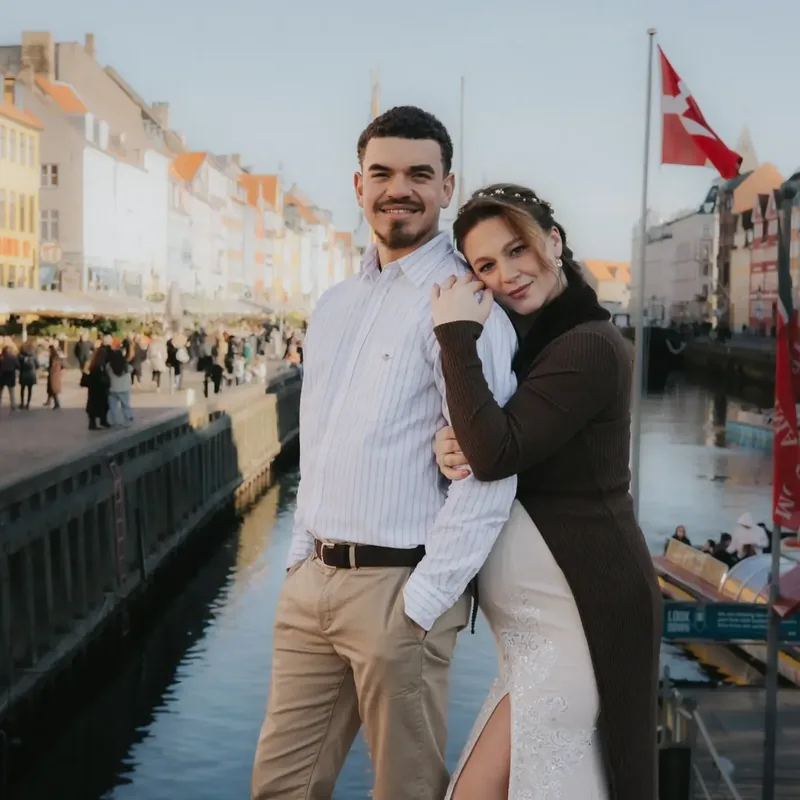
Because Denmark has no residency requirement, you can land in the morning, marry at midday and fly home in the evening. Most couples prefer at least one night in Copenhagen, so the day feels like a celebration rather than a connection between flights, and many add a portrait walk to Nyhavn.
Remember that two witnesses must attend. If you travel without guests, we arrange them. Our article on wedding witnesses in Denmark explains who can act as one.
How long until the marriage counts at home?
Legally, you are married from the moment you sign the register in Denmark. Using the certificate at home is a separate step that can take extra time. Many countries ask for an apostille from the Danish Ministry of Foreign Affairs before they register a foreign marriage.
We can arrange the apostille after you leave and send the certificate to you. How long home registration then takes depends on your own authorities. Our guides on the apostille for a Danish marriage certificate and next steps after the wedding walk you through it.
If you plan a name change, a visa application or a residence permit based on the marriage, build this final stage into your plans. Your personal checklist confirms what your home country usually asks for.
Plan your timeline with us
The sooner we see your nationalities and dates, the sooner we can tell you how long your own wedding is likely to take. Our consultants work in English, Danish and German, and the checklist is free, with no obligation.
Complete (€690), Priority (€1,190) and Premium (€1,590) include application processing and the €282 AFL fee, while Essential (€290) guides you through filing yourself. You can compare them on packages and prices, or read the complete guide to getting married in Denmark first.
Ready to check a date? Contact our team by form, phone or WhatsApp, and you will have your personal checklist within 24 hours.
Written by the Denmark Wedding team in Copenhagen. Published 14 September 2026. Questions? Ask us directly.