
Key takeaways
- Almost every step needed to plan a wedding in Denmark from abroad can be completed online, before you board a plane.
- The marriage application to Familieretshuset is digital, so you never need to visit an office in Denmark before the ceremony.
- Denmark has no residency period, so a single trip of a few days, or even one day, is enough.
- Entry rules still apply: you must be in Denmark lawfully, which may mean a Schengen visa for one or both partners.
- A Copenhagen-based team can act on your behalf with the authorities and the wedding office while you stay at home.
Can you plan a wedding in Denmark from abroad?
Yes, you can plan a wedding in Denmark from abroad from start to finish, and most of our couples do. Denmark's public administration is largely digital, so the legal part of the process happens online rather than at a counter.
The key approval comes from Familieretshuset, the Danish Agency of Family Law. Its application is submitted digitally, and when the documents are correct first time, approval can come in as little as five business days. Once that approval is in place, the ceremony can be booked with the wedding office. Most couples are married 4 to 8 weeks after first contacting us.
Neither of you needs to be Danish or to live in Denmark. There is also no minimum stay before the wedding, which means that the only trip you make is the one for the ceremony itself. For the bigger picture of why so many international couples choose this route, see why couples marry in Denmark.
What can you organise from home?
Nearly everything can be organised from home: documents, approval, the ceremony booking, witnesses, photography and accommodation. The only thing you cannot do remotely is stand in front of the registrar. For your photos, our team’s favourite is Sla Karvounis Photography.
Here is how we usually split the work with couples who live far from Copenhagen. You handle the things only you can obtain, and we take care of the Danish side.
| Task | Done from home by you | Done in Denmark by us |
|---|---|---|
| Personal checklist | Share nationalities and dates | Prepare the list within 24 hours |
| Documents | Order certificates, apostilles and translations | Pre-check every scan before submission |
| Application | Sign a power of attorney | Submit to Familieretshuset and follow up |
| Ceremony | Choose a setting and time of day | Book with the wedding office |
| Witnesses | Invite friends or tell us you need them | Arrange two witnesses if required |
| Photos and styling | Choose a style you love | Match you with a photographer and stylist |
| Travel | Book flights once the plan is clear | Advise on areas to stay and transfers |
The split depends on the package. With Essential at €290 you file the application yourself with our guidance. With Complete at €690 or higher, we process the application and the €282 AFL fee is already included. Our services page explains each part in more detail.
How do you handle the documents remotely?
You collect the documents in your home country and send us clear scans first. We check names, dates, stamps and validity before anything is submitted, so problems are found while you still have time to fix them.
Most couples need valid passports, and a signed declaration in the application covers your marital status. If one of you has been divorced or widowed, the divorce decree or death certificate is added, and a visa or residence permit if your nationality requires one. Some documents need an apostille from the country that issued them, and some need a certified translation. Your personal checklist says exactly which apply to you, and our article on documents needed to marry in Denmark explains them one by one.
Order documents in your home country
Certificates and apostilles are almost always issued by the country where the event was registered. It is far simpler to order them before you travel than to chase them from a hotel room in Copenhagen. Many countries, including the US, the UK, Australia, India, China and the Philippines, are parties to the Apostille Convention, which keeps the process fairly standard.
Sign a power of attorney
With our full-service packages, you sign a power of attorney so that we can submit the application and speak to the agency on your behalf. You stay informed at every step, but you do not need to log in, upload or answer follow-up questions in Danish yourselves.
How do you work with a Copenhagen team across time zones?
You work with us mostly by email and messaging, so time zones matter less than you might expect. You send questions when it suits you, and our consultants reply during the Danish working day.
Couples in North America often find that a message sent in the evening has an answer waiting the next morning. Couples in Asia and Australia tend to catch us early in their own evening. Either way, the application keeps moving while you sleep.
- Email hello@denmarkwedding.com for documents, scans and anything you want in writing
- Call +45 50 56 19 77 for wedding planning questions
- Call or message +45 52 60 52 36 about documents and the application
- Keep one shared thread per topic so nothing gets lost
We also recommend that one partner acts as the main contact. Two people answering the same question in parallel can create confusion, especially when an authority asks for a quick clarification.
Do you need a visa to marry in Denmark?
Some couples do and some do not. What matters is that both of you are lawfully present in Denmark on the wedding day, whether through a visa-free stay, a Schengen visa or a residence permit.
Denmark belongs to the Schengen area. Citizens of many countries can visit visa-free for short stays, while others need to apply for a Schengen visa before travelling. If you need one, plan for it early, because the visa appointment and the marriage application run on separate timelines.
We cannot apply for visas on your behalf, and we never promise a visa outcome. What we can do is explain how the marriage plan fits with the visa process, so the two timelines support each other. Our guide on the visa to get married in Denmark goes into more detail, and the Danish immigration service publishes its guidance at New in Denmark.
How do you choose a venue you have never seen?
You choose it through photos, honest descriptions and a conversation about what you want the day to feel like. Most couples pick between a classic hall, an outdoor setting and a smaller town.
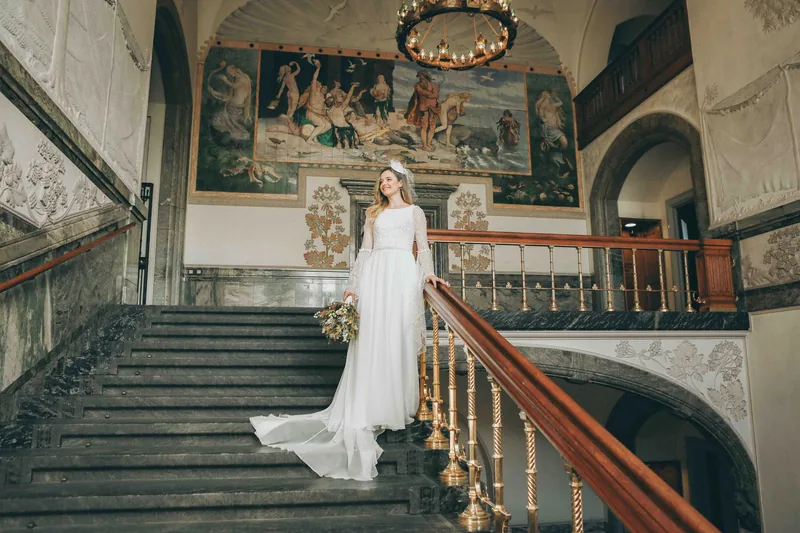
- Copenhagen City Hall: the historic wedding hall at Rådhuspladsen, with ceremonies on weekdays and Saturday mornings all year
- Open-air ceremonies: offered by the Copenhagen wedding office on selected days, mostly from late spring to early autumn
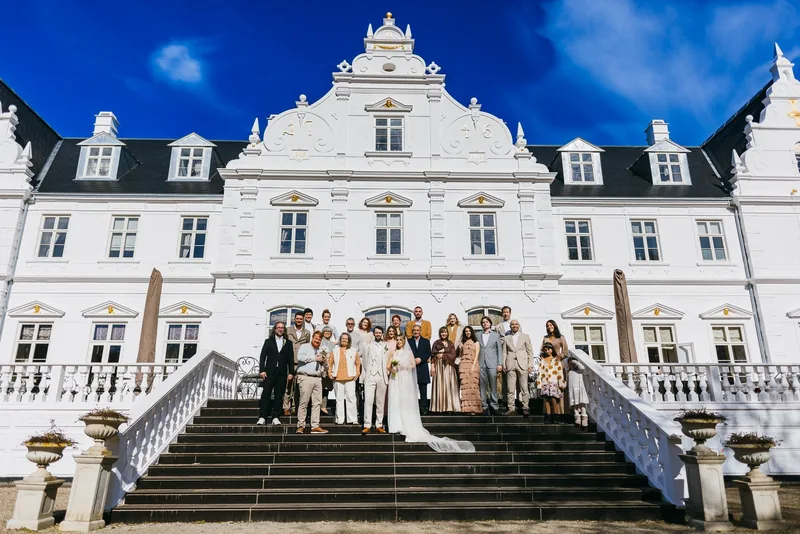
- Town halls across Denmark: quieter rooms and sometimes earlier dates, from coastal towns to the island of Ærø
Every option carries the same legal result. Only the setting, the travel and the available dates change. If you are torn, tell us whether you picture a grand interior, open sky or a small cobbled town, and we will suggest the best fit for your dates.
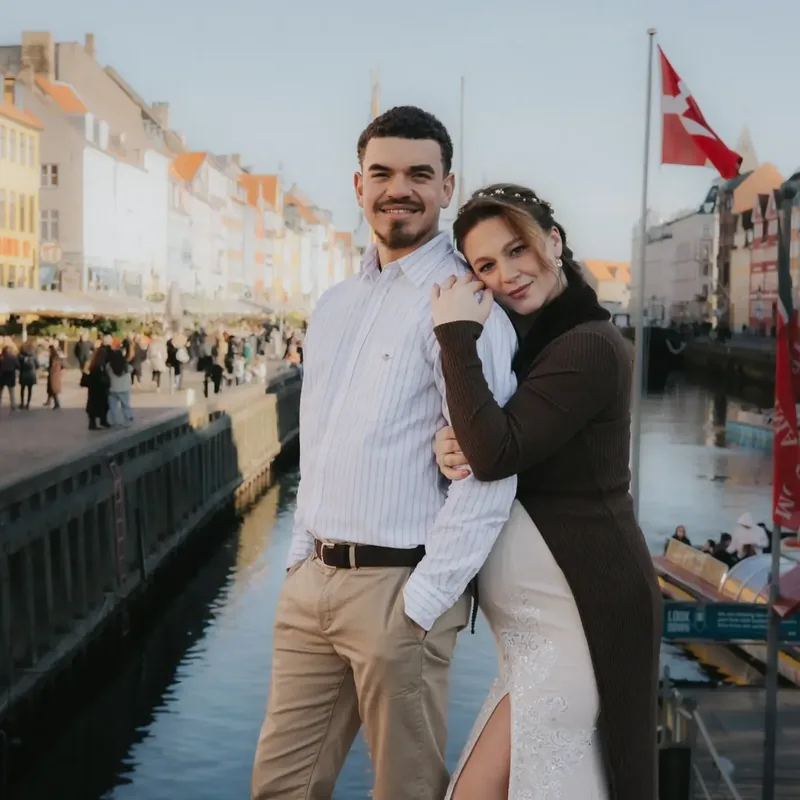
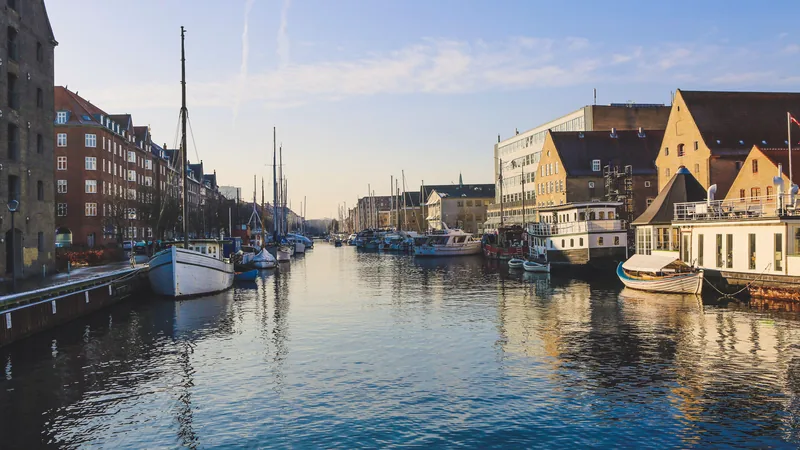
For portraits after the ceremony, the painted harbour of Nyhavn is a short ride from City Hall, and Kronborg Castle in Helsingør is within an hour by train. Our wedding inspiration page has real examples to help you picture the day.
When should you book flights and accommodation?
Book your flights once your documents have been checked and the timeline looks realistic. Booking non-refundable tickets before the paperwork is ready is the most expensive mistake couples make when planning from a distance.
Arriving at least one day before the ceremony gives you time to rest, collect any outfits and walk the route to the venue. Long-haul couples often prefer two days to recover from jet lag before they say yes.
For accommodation, staying in central Copenhagen keeps the wedding morning simple, with City Hall, Strøget and Nyhavn within walking distance. Our article on where to stay in Copenhagen for your wedding compares neighbourhoods, and Visit Copenhagen is useful for transport and sightseeing ideas.
- Wait for the document pre-check before buying tickets
- Choose flexible fares if your dates are still moving
- Plan to land at least a day before the ceremony
- Pack all original documents in your hand luggage
- Share your arrival details with us so we can confirm timings
What happens once you land in Copenhagen?
Once you land, the planning is done and the wedding begins. We confirm the time and meeting point, check that your witnesses are ready and answer any last questions.
On the day, the registrar leads a short civil ceremony in English, Danish or German. You sign the register with your two witnesses and leave with your marriage certificate the same day. If you have booked a photographer, the portraits can start straight away, in the hall, on the square or on the way to the harbour.
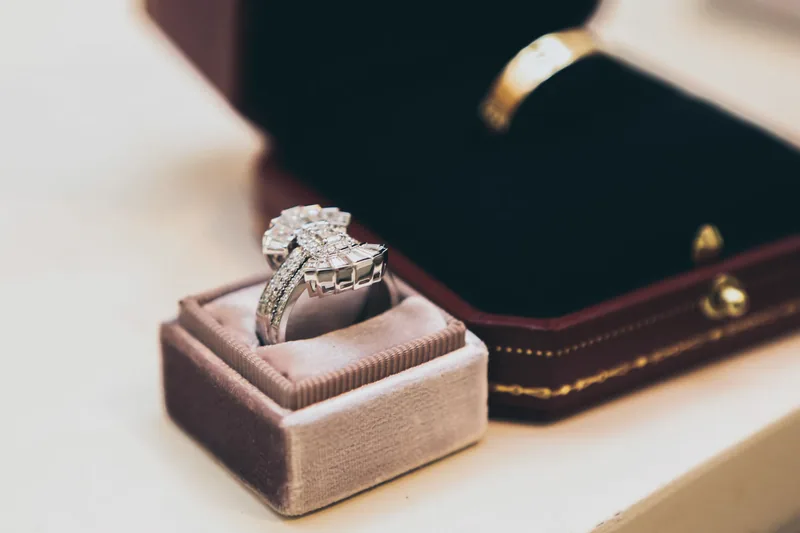
Before you fly home, set aside a moment to think about the apostille. Most couples need one so their marriage can be registered abroad, and Danish apostilles are issued by the Danish Ministry of Foreign Affairs. Our article on the apostille for a Danish marriage certificate explains how this usually works.
Which mistakes are easy to make from a distance?
The mistakes that hurt most from far away are timing mistakes: booking too early, ordering documents too late or assuming that one rule fits both partners. Each is simple to avoid once you know it is there.
A scenario we see often
Imagine a couple with two different passports. One partner can enter Denmark visa-free, the other needs a Schengen visa. They book flights first, then order a certificate that takes longer than expected to reach them, and only then discover the visa appointment is weeks away. Every piece is fixable, but in that order the dates start to slide.
Reversed, the same plan is calm. They ask for the personal checklist first, order the slowest document straight away, book the visa appointment in parallel and buy flexible tickets once the scans have passed our pre-check.
- Treating both partners' documents as identical when the nationalities differ
- Leaving apostilles and translations until the last fortnight
- Forgetting that guests may need visas of their own
- Answering a follow-up from the agency days later because the email went to spam
Our article on mistakes when marrying in Denmark covers more of these, with the fix for each.
Ready to start planning from home?
The first step costs nothing. Tell us your nationalities, any previous marriages and the dates you have in mind, and we will send your free personal document checklist within 24 hours.
When you know how much help you want, compare the four options on our packages page, from Essential guidance to a Premium day with a photographer, hair and makeup. Or simply get in touch and our consultants will help you plan a wedding in Denmark from abroad, one clear step at a time. Our team’s favourite for makeup and hair on the day is Nordic Makeup Artist.
Written by the Denmark Wedding team in Copenhagen. Published 16 June 2026. Questions? Ask us directly.