Key takeaways
- Indian citizens can marry in Denmark without living there, as long as they are lawfully present on the wedding day.
- Most Indian passport holders need a Schengen visa, unless they hold a residence permit that covers the Schengen area.
- India is a party to the Apostille Convention, and Indian apostilles are issued by the Ministry of External Affairs, often after a state-level step.
- Names that are written differently across documents are the most common reason for questions, so consistency matters.
- The Danish civil ceremony is the legal marriage; many couples add a religious or family celebration before or after it.
Can an Indian couple marry in Denmark?
Yes. An Indian couple marriage in Denmark is a fully legal civil marriage, and Indian citizens do not need to live in Denmark or have a Danish partner. The same is true when only one of you is Indian and the other holds a different passport.
Couples come to us for many reasons. Some live and work in Europe and want a simple legal ceremony close to home. Others live in India and want a beautiful, intimate wedding for two, with the big family celebration planned separately. Many are mixed couples who need a neutral country with a clear, fair process.
This guide describes the general route for Indian citizens. Document rules in India differ between states, and every life story is different, so please read it as an overview. Your free personal checklist from our consultants confirms exactly what you need.
Do Indian citizens need a visa to marry in Denmark?
Most do. Indian passport holders generally need a Schengen visa for a short stay in Denmark, unless they already hold a residence permit or long-stay visa from a Schengen country that allows travel. To marry, you must be lawfully present in Denmark on the wedding day.
The visa and the marriage approval are two separate processes run by different authorities. That is why timing matters so much for Indian couples. We help you plan an order that makes sense, so you are not waiting for one while the other expires.
- Couples living in India usually apply for a short-stay Schengen visa for Denmark.
- Couples living in a Schengen country often travel on their residence permit, which can simplify the trip.
- Couples living in the UK, the Gulf or elsewhere follow the visa rules for where they apply from.
- If one partner is a citizen of a visa-free country, only the Indian partner needs to plan a visa.
Official guidance is published by the Danish immigration service at nyidanmark.dk and by the Danish Ministry of Foreign Affairs at um.dk. Our article on getting a visa to get married in Denmark explains the general logic in more depth.
Which documents do Indian citizens usually need?
Usually valid passports and evidence of lawful stay in Denmark. If either of you was married before, the final divorce decree or the death certificate of a former spouse is added, and if you have children together, their birth certificates are included too.
You each sign a truthful declaration of your marital status in the Familieretshuset application, and that signed declaration is enough. Where Indian files do vary is in divorce papers, name records and whether a particular certificate needs an apostille or a translation, which depends on the state that issued it. We do not guess here: your checklist names exactly what is expected for your case.
| Situation | Documents that often come up |
|---|---|
| Never married | Passport and proof of lawful stay |
| Divorced | As above, plus the final divorce decree from the family court |
| Widowed | As above, plus the death certificate of the former spouse |
| Children together | As above, plus the birth certificates of your children |
| Living outside India | As above, plus your residence permit, if you travel on it |
Our general overview of documents needed to marry in Denmark shows how these pieces fit together. We pre-check every scan before filing, so mistakes are caught on our desk and not at the authority.
How do apostilles work for Indian documents?
India and Denmark are both parties to the Apostille Convention. In India, apostilles are issued by the Ministry of External Affairs, and many documents first need a verification or attestation step at state level before the ministry will apostille them.
This two-step pattern is why we advise Indian couples to start early. The exact route depends on the type of document and the state that issued it, and the steps can take time. Whether a particular document needs an apostille for Familieretshuset is something your checklist confirms.
- Obtain the original document or a certified copy from the issuing office.
- Complete any state-level verification that applies to that document.
- Submit it for an apostille from the Ministry of External Affairs.
- Scan the document and the apostille, every page, in colour.
- Send the scans to us for a pre-check before anything is filed.
Apostilles work both ways. When you return home, your Danish certificate can be apostilled by the Danish Ministry of Foreign Affairs. Read more in our guide to the apostille for a Danish marriage certificate.
Why do names matter so much on Indian documents?
Because the authority needs to see that every document belongs to the same person. Indian names are often written in different ways: a surname may be missing on one document, initials may replace a father's name on another, or the spelling may change between school records and a passport.
None of this is unusual, but it can lead to questions if it is not explained. We compare every name across your passport, certificates and affidavits before filing, and if something differs we suggest how to document it clearly.
- Check that your name appears in the same order on every document.
- Note any single-name passports, where the given name field is used alone.
- Keep any gazette notification or affidavit that records a change of name.
- Use the passport spelling for bookings, forms and the marriage certificate.
Can we combine a civil wedding with Indian traditions?
Yes, and many couples do. The Danish civil ceremony is the legal marriage. It is short, non-religious and led by a registrar, and it can sit alongside any religious or family ceremony you hold in India, in Denmark or elsewhere.
Some couples marry legally in Copenhagen first and hold their traditional wedding at home months later. Others celebrate a family wedding first and then come to Denmark for the legal step, sometimes as a honeymoon. Both orders work, and we help you plan the Danish part around your family calendar.
You are welcome to wear traditional clothes at Copenhagen City Hall. A lehenga, saree or sherwani looks wonderful on the staircases and in the courtyard. Bring comfortable shoes for the cobbles and a light layer, because Danish weather can be cool even in summer.
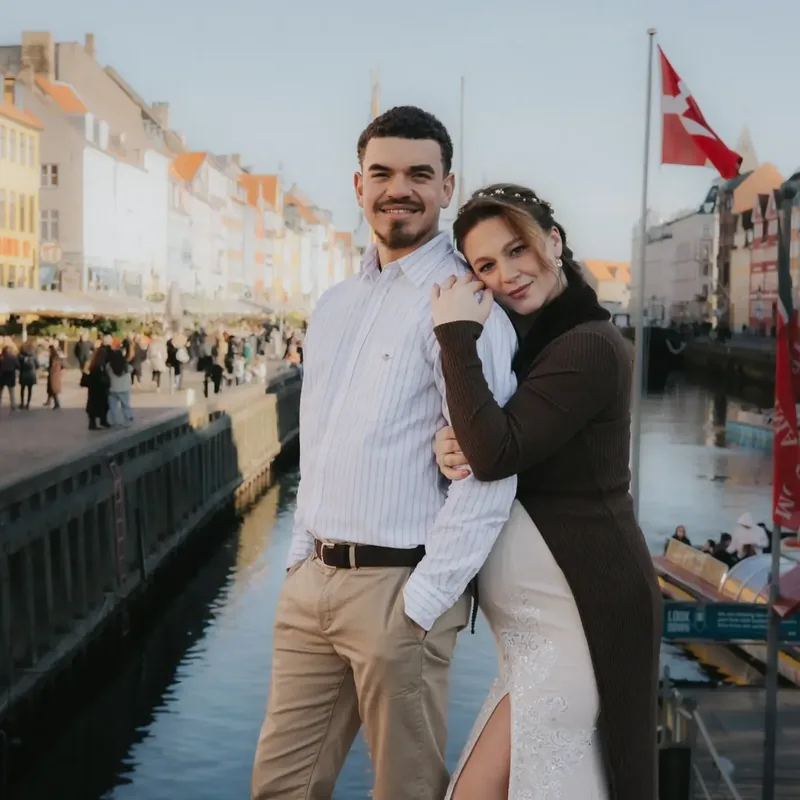
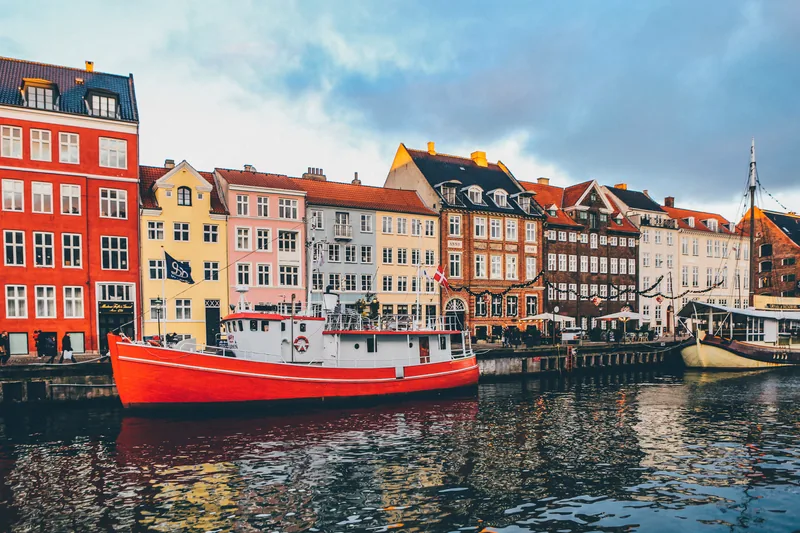
Afterwards, the colourful houses of Nyhavn, the glasshouse at the Botanical Garden and the paths of Kongens Have make lovely portrait spots. Our wedding inspiration page shows the mood of a Copenhagen wedding day.

How long does the whole process take?
Plan for more time than the Danish approval alone. Familieretshuset can approve a complete file in as little as five business days, but a Schengen visa, plus any Indian divorce papers and apostilles, often takes longer. Overall, most couples are married 4 to 8 weeks after first contacting us.
| Stage | Usually handled by | Planning note |
|---|---|---|
| Personal checklist | Our consultants | Sent within 24 hours |
| Any Indian documents and apostilles | You, with our guidance | Often the longest stage |
| Pre-check and filing | Our team | Mistakes are fixed before submission |
| Familieretshuset approval | The authority | From five business days if complete |
| Schengen visa | You, at the visa centre | Plan in step with the approval |
| Ceremony | Our team books it | At the first suitable slot |
Our article on how long it takes to get married in Denmark gives more detail. We cannot speak for the visa authorities or promise their timings, but we help you build a realistic plan.
Your travel checklist for the wedding week
Once approval and the visa are in place, the last week is about details. Indian couples often travel with more luggage than most, with outfits, jewellery and gifts for family, so a little preparation keeps the day calm.
- Original passports with the visa or residence permit, plus printed copies of the approval and booking confirmations.
- Wedding outfits and jewellery in hand luggage, never in a checked suitcase.
- Rings, garlands or any small ritual items you want at the ceremony, packed in one labelled pouch.
- Warm layers and a compact umbrella, whatever the season.
- Phone numbers for our team and your witnesses saved before you leave home.
- A plan for the first evening, such as a quiet walk along the canals or through Tivoli, so you rest before the ceremony.
Is a Danish marriage recognised in India?
A Danish civil marriage is a legally binding marriage, and the certificate can be apostilled for use abroad. How it is used and registered in India depends on your personal circumstances and the law that applies to you, so we always recommend checking with an Indian lawyer or the relevant authority.
In daily life, couples use the certificate for spouse visas, passport updates, bank records and residence matters in the country where they live. Each authority sets its own rules on translations and apostilles. Danish certificates can be issued in English, which helps in most cases.
Same-sex marriage has been legal in Denmark since 2012, and Denmark welcomes every couple. Recognition of same-sex marriages differs greatly between countries, and Indian law currently treats this differently from Denmark, so same-sex couples should seek advice about how the marriage will be treated at home. Our guide to whether a Danish marriage is recognised abroad explains the general principles.
What does it cost?
Our packages cost €290, €690, €1,190 and €1,590, all with tax and 25% Danish VAT included. The Familieretshuset (AFL) fee of €282 is included in Complete, Priority and Premium; with Essential you pay it to the authority yourself.
| Package | Price | Often chosen by |
|---|---|---|
| Essential | €290 | couples living in Europe who are confident with paperwork |
| Complete | €690 | couples who want us to process the application for them |
| Priority | €1,190 | couples on a tight visa window; express date when a private registrar is available |
| Premium | €1,590 | couples who want photos, hair and makeup arranged too |
Your own costs for Indian certificates, apostilles, visa fees, flights and hotels come on top. You will find every inclusion listed on our packages page.
Start with your free checklist
Tell us your nationalities, the state where your documents were issued, where you live now and the months you are considering. Within one business day our consultants reply with your personal checklist and the dates that look realistic.
We then pre-check every page, file with Familieretshuset and book your ceremony, while you focus on the visa and the outfits. Contact us to begin, or read the FAQ first.
Written by the Denmark Wedding team in Copenhagen. Published 28 February 2026. Questions? Ask us directly.