

Key takeaways
- Every Danish municipality performs civil weddings under the same law, so the certificate is equally valid everywhere.
- Familieretshuset approves your documents first; the town hall only books and performs the ceremony.
- Smaller municipalities can sometimes offer a date sooner than Copenhagen, especially in the busy summer months.
- The municipality that marries you issues your marriage certificate on the day, and it can be apostilled for use abroad.
- Many towns we suggest are within about two hours of Copenhagen by train or car, and some combine a ceremony with the sea or a castle.
Why choose a town hall wedding in Denmark outside Copenhagen?
The main reasons are dates, atmosphere and the trip itself. A town hall wedding in Denmark outside the capital can give you an earlier ceremony, a calmer setting and a reason to see more of the country than one city.
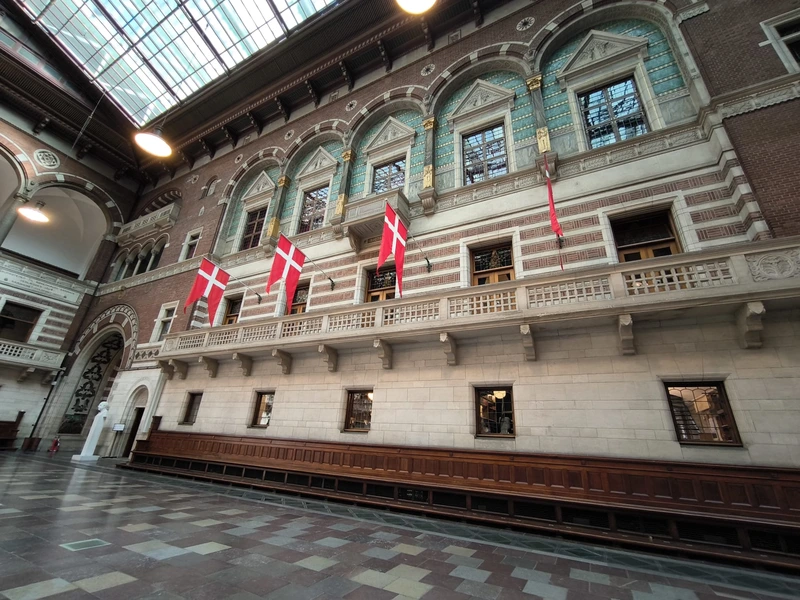
Copenhagen City Hall is the best-known choice, and its dates are the first to fill, particularly from late spring to the end of summer. When your travel window is fixed, waiting for a slot in the capital is not always possible. Another municipality may have space earlier in the same week, sometimes on the very days you had in mind.
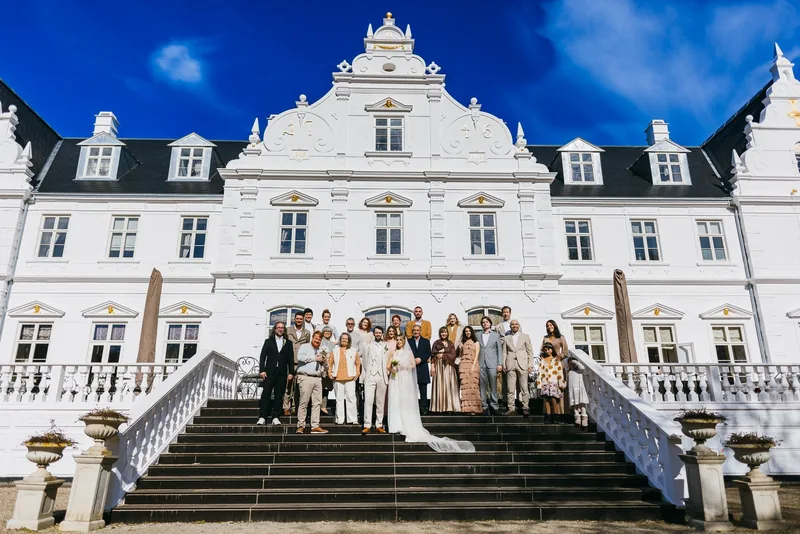
The setting matters too. A small ceremony room in a historic town feels personal, and you may have the building almost to yourselves. Step outside and you find a harbour, half-timbered houses or open countryside instead of city traffic.
Finally, a smaller town turns the wedding into a short holiday. Couples arrive the day before, marry the next morning and spend the afternoon on a beach or by a castle. You can see the type of places we work with on our town halls across Denmark page.
Is a smaller town hall wedding legally the same as one in Copenhagen?
Yes, completely. Danish civil marriages are governed by national law, and every municipality applies the same rules, so a ceremony in a small island town hall produces exactly the same marriage as one at Rådhuspladsen.
The legal steps do not change with the location. Familieretshuset, the Danish Agency of Family Law, checks your documents and approves your marriage. After that, a registrar from the municipality you choose leads a short civil ceremony, two witnesses sign alongside you, and you receive your certificate.
- Same approval: Familieretshuset handles every application from couples who live abroad
- Same ceremony: a registrar, the legal question, your answers and the signing
- Same witnesses: two are needed, and we can arrange them if you travel alone
- Same certificate: issued by the municipality, available in a multilingual format
- Same recognition: the marriage is a legal civil marriage wherever you live
What differs is practical: the room, the language options of the local registrar, the days the municipality marries couples and how far it is from your hotel. We check those details for you before suggesting anywhere. For the wider legal picture, read our guide on how to get married in Denmark.
Which parts of Denmark can you choose from?
You can choose from coastal towns north of Copenhagen, islands in the south of the country and historic towns in Jutland. Each region gives your day a different character, and the right one depends on how far you want to travel.
North Zealand and the Øresund coast
The coast north of Copenhagen is the easiest step away from the capital. Beaches, fishing harbours and Kronborg Castle at Helsingør are all within an hour or so, and a ceremony there can be followed by portraits by the sea. Our article on a wedding day trip to Kronborg and Helsingør shows how that day can flow.
Funen and the South Funen Archipelago
Further west, the island of Funen and the small islands to its south offer a slower pace. Ærø in particular is known as a wedding island, with colourful cottages, cobbled lanes and beach huts, and is reached by ferry. Our Ærø wedding guide covers it in depth.
Jutland's old market towns
On the mainland, old market towns with cobbled squares and centuries-old houses suit couples who would like a historic, unhurried feel. They take longer to reach from Copenhagen, so they work best when you plan a few days in the country.

Copenhagen or a smaller town hall: how do they compare?
Neither is better in general: Copenhagen is the most convenient, and smaller towns are often more flexible and more intimate. This comparison helps you see which matters more for your plans.
| Copenhagen City Hall | A smaller town hall | |
|---|---|---|
| Legal effect | Full civil marriage | Exactly the same |
| Date availability | Popular, fills first in summer | Often more flexible, sometimes earlier |
| Setting | Grand historic hall in the city centre | Smaller room, quieter town, sea or countryside nearby |
| Getting there | Walk or a short taxi from central hotels | Train, car or ferry, planned in advance |
| Photos afterwards | Nyhavn, the old town, Tivoli and the harbour | Harbours, beaches, castles and old streets |
| Best for | Short trips and couples who want city life | Couples who want a mini holiday or need an earlier date |
Three examples of how couples decide
- A couple flying in for four days in August finds Copenhagen full on their dates. A coastal town north of the capital has a slot mid-week, so they marry there in the morning and are back in the city for dinner.
- A couple who would like their wedding to feel like a holiday choose an island. They take the ferry the day before, marry the next morning and stay two more nights for cycling and beaches.
- A couple bringing parents and siblings want a historic setting without a long journey for older relatives. A town within an hour by train, with a hotel near the town hall, keeps everyone comfortable.
Some couples do both: they marry in a small town for an earlier date and then spend a few days in the capital. If Copenhagen is still your first choice, our Copenhagen City Hall wedding guide explains what to expect there.
How do we choose the right town hall for you?
We start from your dates and your travel plans, then match them with municipalities that marry international couples and suit the atmosphere you want. You get two or three concrete suggestions rather than a long list.
- You tell us your nationalities, your travel window and how many guests are coming.
- We send your free personal document checklist within 24 hours and start preparing the application.
- We look at which municipalities suit your dates, your route and the feel you are after.
- We check current ceremony days and language options with those town halls.
- You choose, and we request the booking as soon as Familieretshuset has approved your documents.
- We plan transport, somewhere to stay and photography around the ceremony time.
Group size is an important part of this. Ceremony rooms in small towns are often smaller than the hall in Copenhagen, so if you are bringing a larger party we check the room before recommending it. For your photos, our team’s favourite is Sla Karvounis Photography.
How long does it take to arrange a town hall wedding outside the capital?
The timeline is driven mainly by the approval, not by the town hall you choose. When documents are complete and correct first time, Familieretshuset can approve a marriage in as little as five business days, and most couples are married 4 to 8 weeks after first contacting us.
Choosing a smaller municipality can shorten the second part of that journey, because it may have an earlier slot than the capital. It cannot speed up the approval itself, and nobody can promise how quickly the authorities will decide a particular case.
Your approval also has a validity window, so we book the ceremony and plan travel to fall comfortably within it. Our guide on how long it takes to get married in Denmark explains each stage, and our Priority package adds a private registrar and, when one is available, an express date if your timing is tight.
How do you travel to a town hall outside Copenhagen?
Most towns we suggest are easy to reach by train, and we can book a private driver if you prefer door-to-door travel. Islands add a ferry crossing, which becomes a lovely part of the day rather than a hurdle.
- Train: comfortable and frequent on the main lines, good for couples travelling light
- Private driver: ideal with guests, flowers and a photographer, and for stops on the way
- Ferry: needed for island weddings such as Ærø, so we book your crossing in advance
- Overnight stay: recommended for anywhere more than a couple of hours away
We plan departure times so that you arrive relaxed, with time to change before the ceremony. For longer journeys, we usually suggest travelling the day before, so the wedding morning is calm and nobody is watching a timetable in their best clothes.
If you are flying in, read our advice on travelling with a wedding dress before you pack.
What happens on the day of a small-town ceremony?
The day itself feels much like a ceremony in the capital, only quieter. You arrive a little early, meet the registrar, and your witnesses and guests take their places before a short, personal civil ceremony.
The registrar asks each of you the legal question, you answer, exchange rings if you wish and sign the register together with your two witnesses. The municipality issues your marriage certificate on the day, so you leave legally married.
Afterwards, the town is your backdrop. A harbour, an old church square, a beach or a manor garden are often only minutes away, and with fewer people around, the portraits feel unhurried. Lunch in town, then either a train back to Copenhagen or a night by the sea.

What happens with your certificate after the wedding?
Your certificate works the same way whichever municipality issues it. It can be requested in a multilingual format and, if your home country needs it, legalised with an apostille.
Danish apostilles are issued by the Danish Ministry of Foreign Affairs. Countries such as the United Kingdom, the United States, Australia, India, the Philippines and China are parties to the Apostille Convention, which is how many couples register a Danish marriage at home. We can arrange the apostille for you after the wedding.
Registration rules differ by country and change from time to time, so your personal checklist confirms what applies to you. Our article on the apostille for a Danish marriage certificate goes into more detail.
Ready to find your town hall?
Send us your nationalities, your travel window and the kind of setting you picture, whether that is the sea, an island or a historic town. We reply with your free document checklist and the municipalities that suit your dates.
All our packages work with a town hall outside Copenhagen, from Essential at €290 to Premium at €1,590, including tax and 25% VAT. When you are ready, contact our team and we will start looking for your date.
Written by the Denmark Wedding team in Copenhagen. Published 16 July 2026. Questions? Ask us directly.