Key takeaways
- A civil marriage performed in Denmark is a legally binding marriage, not a symbolic ceremony.
- Most countries accept a marriage that was valid in the country where it took place, but each country applies its own law.
- Recognition and registration are different: some countries record foreign marriages, while others simply accept the certificate as proof.
- An apostille from the Danish Ministry of Foreign Affairs is the usual way to show your certificate is genuine abroad.
- Recognition of same-sex marriages varies widely, so check your home country's position before you travel.
Is a Danish marriage recognised abroad?
Is a Danish marriage recognised abroad? For the great majority of the couples we work with, the answer is yes. A wedding performed by a Danish registrar, after approval from Familieretshuset, the Danish Agency of Family Law, creates a complete legal marriage under Danish law.
Most legal systems follow a long-established principle: a marriage that was validly formed in the country where it took place is, in general, treated as valid elsewhere. That principle is the reason so many international couples can marry in Copenhagen and return home as a married couple in the eyes of their own authorities.
There are limits, though. Your home country decides for itself what it accepts, and some countries add conditions of their own, especially for their own citizens. This article explains the general picture honestly, and your personal checklist confirms what applies in your case.
What is the difference between recognised and registered?
Recognition means your home country treats you as married; registration means it records the marriage in an official register. The two often go together, but they are not the same thing.
Some countries keep a civil register for their citizens and expect a marriage abroad to be entered into it, sometimes through a consulate. Others have no central register for overseas marriages at all, and you simply show your foreign certificate whenever you need to prove that you are married.
| Term | What it means | What you usually do |
|---|---|---|
| Valid | The marriage was legally formed in Denmark | Nothing extra: this happens at the ceremony |
| Recognised | Your home country accepts you as married | Show the certificate when asked, often with an apostille |
| Registered | Your marriage is entered in a home register | Apply to a civil registry or consulate, if your country does this |
Understanding which of these your country uses makes the paperwork after the wedding much clearer. It also stops couples worrying about a registration step that their country simply does not have.
Why the difference matters in practice
Couples sometimes spend weeks looking for a registration office that does not exist, or assume no step is needed when their consulate actually expects a report. Knowing which system your country uses lets you prepare the right documents before the wedding, rather than discovering the requirement when you need to prove your marriage for a visa, a mortgage or a new passport.
How do countries usually recognise a marriage from Denmark?
Most countries recognise a foreign marriage by accepting the official certificate, authenticated where needed. The route usually looks like this.
- You marry in Denmark and receive the marriage certificate from the municipality on the day.
- You choose a language version that suits your home authority: Danish, English, German, French or Spanish.
- The certificate receives an apostille from the Danish Ministry of Foreign Affairs, or legalisation if your country requires it.
- If needed, the certificate and apostille are translated into your home language.
- You present the certificate to the relevant authority at home, or to your embassy or consulate.
- Where your country registers foreign marriages, the authority records it and may issue a local document.
Our article on the apostille for a Danish marriage certificate explains step three in detail, including what to do if your country is outside the Apostille Convention.
Three typical scenarios
Picture a couple who live together in a country where neither of them is a citizen. They may need the marriage recognised in their country of residence for a family permit, and also in each of their home countries. Planning for all three from the start avoids ordering extra certificates later from abroad.
Now picture a couple from a country with no register of overseas marriages. Recognition for them simply means keeping the apostilled certificate safe and producing it when a bank, employer or passport office asks.
Finally, imagine a couple whose country requires citizens to report a marriage abroad to their embassy within a set period. For them, the report is the key step, and the Danish certificate is the evidence it relies on.
How does it usually work in common home countries?
The overview below shows the general pattern for some of the nationalities we see most often. It is a starting point, not legal advice, and rules change. Always confirm with your own authorities, and use your personal checklist as the final word.
| Country | General approach | Our guide |
|---|---|---|
| United States | No national register of foreign marriages; the certificate, usually apostilled, is used as proof | US citizens |
| United Kingdom | No routine UK registration of overseas marriages; the certificate is used as proof | UK citizens |
| Australia | Foreign marriages are generally recognised if valid where performed; the certificate is used as proof | Australians |
| India | Recognition and any later registration depend on the couple's circumstances | Indian couples |
| China | An apostilled certificate is commonly needed; local procedures apply | Chinese couples |
| Philippines | Citizens usually file a Report of Marriage with a Philippine embassy or consulate | Filipino couples |
Each guide goes into more detail: read our articles for US citizens, UK citizens, Australians and New Zealanders, Indian couples, Chinese couples and Filipino couples.
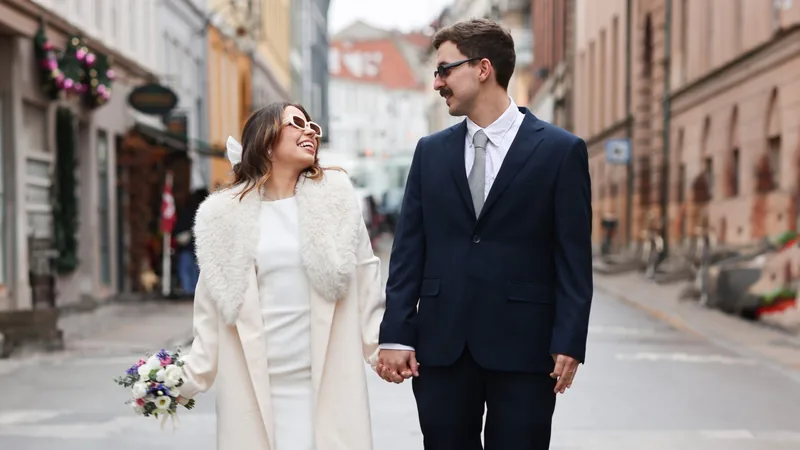
Will a same-sex marriage from Denmark be recognised?
It depends entirely on your home country. In Denmark, same-sex marriage has been legal since 2012, and the country created the world's first registered partnership in 1989. A same-sex marriage performed here is as valid in Denmark as any other.
Abroad, the picture is mixed. Some countries recognise same-sex marriages performed elsewhere in full, some recognise them only for certain purposes, and some do not recognise them at all. A few treat them as a registered partnership rather than a marriage.
We will always give you an honest view before you apply, and we never suggest that a Danish wedding can change your home country's law. Our guide to same-sex marriage in Denmark covers the Danish side, and we are happy to talk through your plans in confidence.
Which paperwork helps your marriage be recognised?
A clean, authenticated certificate in the right language does most of the work. These are the pieces that make recognition smooth.
- The original Danish marriage certificate, in the language that suits your home authority.
- An apostille from the Danish Ministry of Foreign Affairs, or legalisation where the convention does not apply.
- A translation, if the receiving authority asks for one, made from the apostilled original.
- Your passports, showing the same names as on the certificate.
- Any form your country uses to register or report a marriage abroad.
- Extra originals, if several authorities will each keep one.
For the documents you need before the wedding, see our guide to the documents needed to marry in Denmark. This article is about the documents that travel home with you afterwards.
When could a home country refuse to recognise the marriage?
Refusals are uncommon, but they can happen when a home country's own law would not have allowed the marriage. Each country sets its own rules, so the examples below are general, not a prediction for any couple.
- One partner was still legally married to someone else at the time of the wedding.
- The marriage conflicts with the home country's rules on age or close family relationships.
- The home country does not recognise same-sex marriages performed abroad.
- The home country requires its citizens to meet extra formalities before or after marrying abroad, and these were not completed.
Familieretshuset's review in Denmark already checks many of these points, such as age and previous marriages. It cannot, however, check every rule of every other country, and it does not decide how your home country will treat the marriage.
If your nationality has special requirements, we flag them on your checklist so you can deal with them before you travel, not after.
Dual nationals and couples of two nationalities
If one partner holds two nationalities, or you each come from a different country, recognition may need to be checked in more than one place. A marriage can be accepted smoothly in one country while the other asks for extra paperwork. We list each country separately on your checklist so nothing is overlooked.
How will you use the certificate once you are home?
You will use it whenever you need to prove that you are married. For most couples, that happens several times in the first year.
| Task | Typical authority or body | What to bring |
|---|---|---|
| Changing a surname | Passport office or civil registry | Certificate, apostille, any translation |
| Family visa or residence permit | Immigration authority | Certificate, apostille and the forms they request |
| Updating tax or pension records | Tax office or employer | Certificate, sometimes a translation |
| Insurance and health cover | Insurer or health provider | Certificate or a certified copy |
| Joint financial matters | Bank or lender | Certificate and passports |
If either of you plans to change surname, our guide to the name change after a Danish marriage explains the options. For a wider checklist of what to do after the ceremony, read your Danish marriage certificate and next steps.
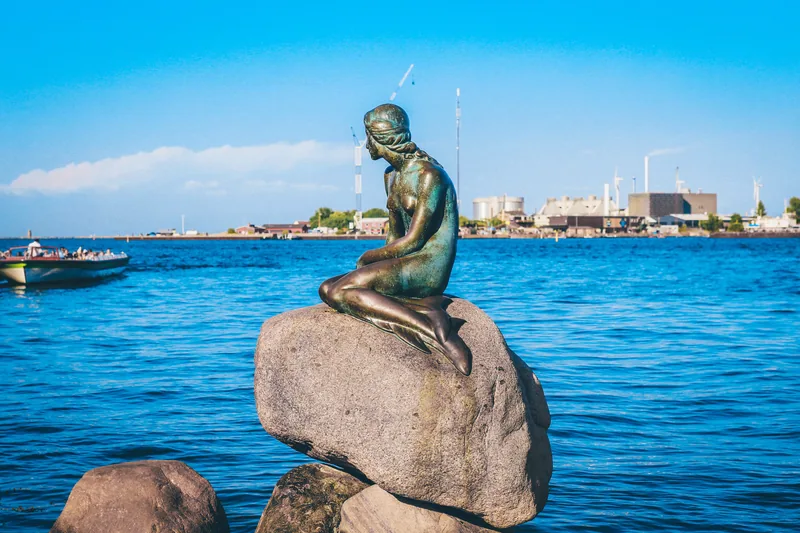
What if you live in Denmark or plan to move here?
If you already live in Denmark, your marriage is normally recorded in the Danish civil registration system as part of the usual process. Practical information about life in Denmark, from registration to family matters, is collected on lifeindenmark.borger.dk.
If one of you hopes to move to Denmark on the basis of the marriage, that is a separate immigration matter. Marrying in Denmark does not by itself give a right to residence. The rules for family reunification are published on nyidanmark.dk, and they should be read carefully before you make plans.
Check recognition before you book
The calmest weddings are the ones where the couple already knows what will happen to the certificate afterwards. Tell us your nationalities, where you live and where the marriage must be recognised, and we include those steps in your personal checklist.
Send your details through our contact page for a free checklist within 24 hours, browse the common questions on our FAQ page, or compare the four wedding packages, from €290 to €1,590 including VAT.
Written by the Denmark Wedding team in Copenhagen. Published 20 October 2026. Questions? Ask us directly.